

Stage 2 Explore Further
Lesson 5/21
College of Intercultural Communication (CIC)
College of Intercultural Communication
Intercultural Communication for Global Leadership
Intercultural Communication for Global Leadership fosters the ability to propose solutions for an increasingly diverse and complex society, with plurilingualism and pluriculturalism as the founding and guiding principles. As a PEACE Program student—through your experience of living in Japan coupled with the study of Intercultural Communication—you will explore multicultural situations while putting emphasis on one or more of the following fields: Language Studies, Translation and Interpreting Studies, Communication Studies, and/or Global Studies.
| Degree | Bachelor of Arts in Intercultural Communication |
|---|---|
| Duration | 4 years |
| Semesters of intake | Spring (April) & Fall (September) |
| Admissions requirements | |
| Admission capacity | 10 |
| Tuition and academic fees (annual) | 1,191,500 JPY |
Curriculum
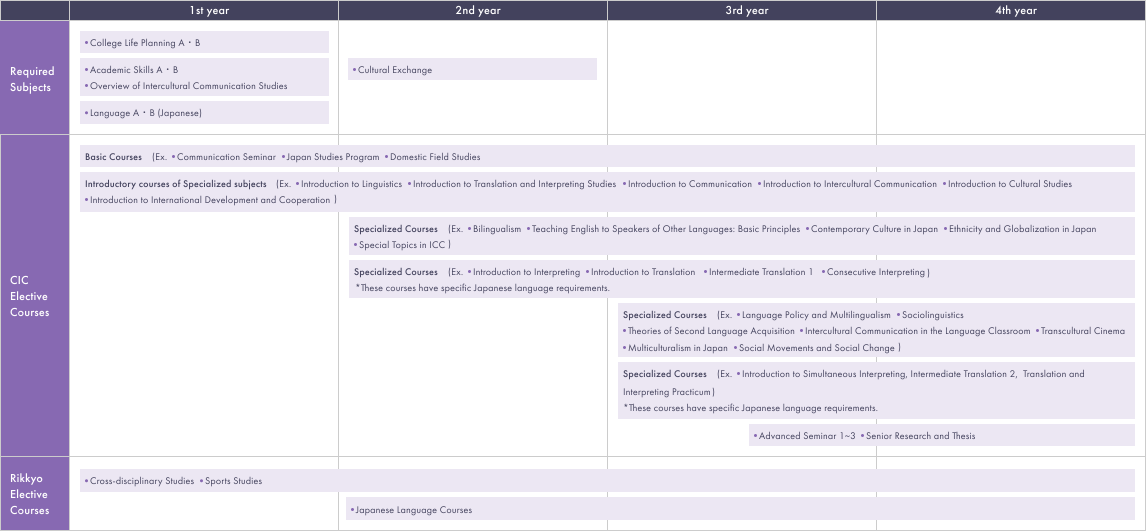
Course Examples
Advanced Seminar: Intercultural Communication
The primary goal of this course is to explore the historical development of dominant social media platforms (e.g., YouTube, TikTok) and their ongoing relationship to cultural practices. This course will discuss how social media has become a predominant form of communication and, as a result, a "home" for cultural practices.
Advanced Seminar: Language and Identity
This course introduces students to the role of language in creating, maintaining, and changing personal, social, and political identities. Key themes covered in this course include individual and group identities, dialect, religion, gender, ethnicity, nationalism, language policy, and multi/translingualism.
Globalization and Gender
This course focuses on the impact of globalization in Asia from the perspective of gender. Students read and discuss how globalization has impacted social, economic, political, and cultural changes in Asian countries, and how these changes have had effects on gender roles.
Career
We envision our graduates to contribute to the development of a multicultural society by offering diversified perspectives and a global mindset to every task they face. Possible careers that require advanced intercultural competence are, but not limited to, the fields of: teaching languages (English, Japanese); translation and interpreting; international development or working for global companies/organizations.
